Mobile Tyre Replacement in Reading for Worn, Damaged and Blown Tyres
When a tyre can’t be repaired, we bring a new one to you and change it where the car stands. Most sizes are replaced the same day, at any hour.
Request Call Back
24/7
Emergency call-outs
20 - 30 Min
Typical response time
From £80
Supplied & fitted
35+
Towns covered
Quick Answer
When a tyre needs replacing
Mobile Tyre Replacement Reading
Signs your tyre has reached the end
Look in the main grooves of the tread and you will find small raised bars. These are tread wear indicators, set at 1.6mm. When the tread surface is level with them, the tyre is at the legal limit and needs changing. Many tyre safety groups advise replacing at 3mm, because wet braking distances get noticeably longer below that depth.
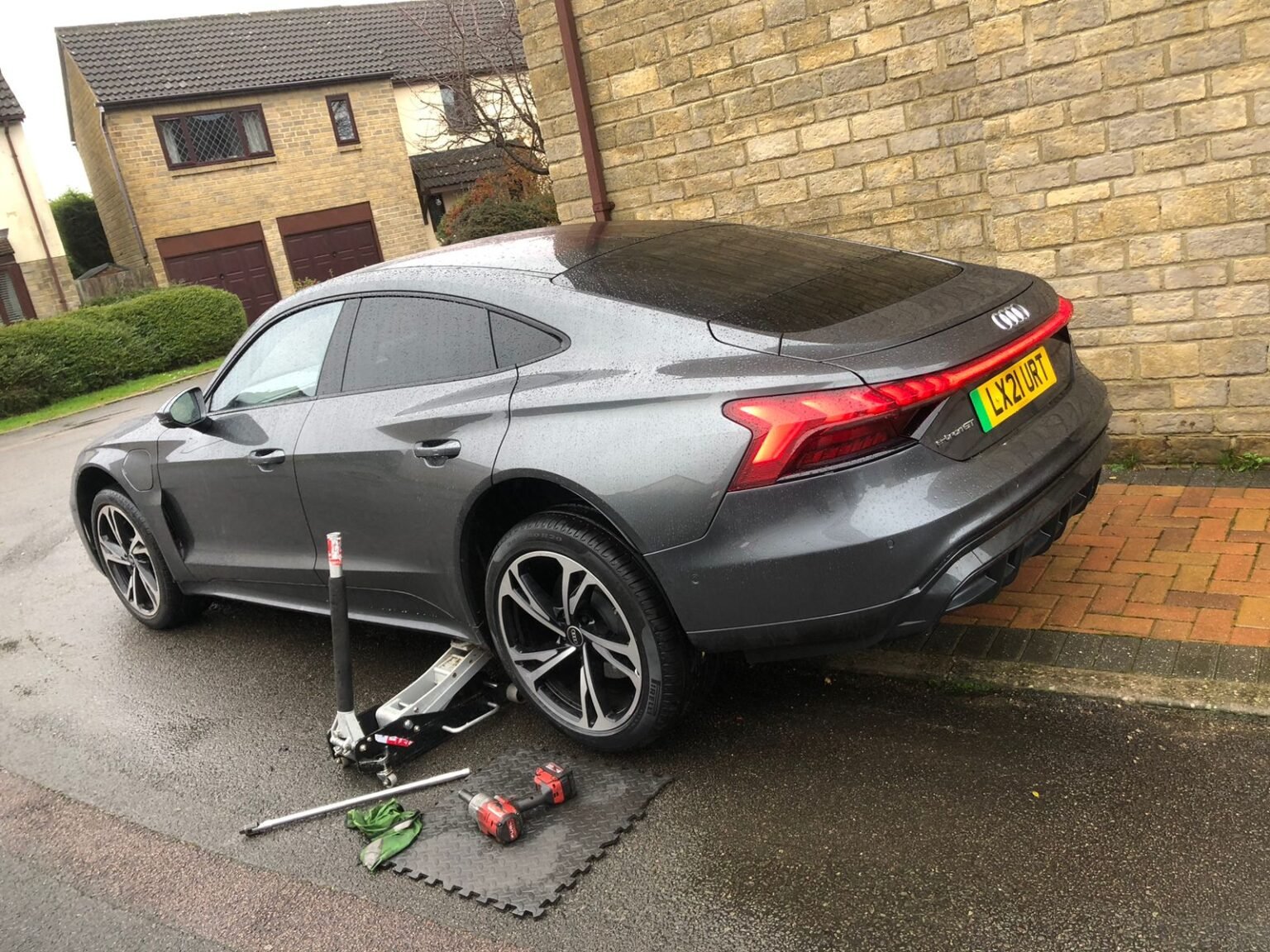
Damage is the other common reason. A pothole or a hard kerb strike can break the cords inside the tyre and leave a bulge on the sidewall. It might hold air for weeks, but the tyre is weakened at that spot and can fail at speed. Cuts that reach the cords, cracking from age and any tyre that has been driven while flat should also be replaced, not repaired.
Age matters too, especially on cars that don’t cover many miles. Rubber hardens and cracks over time even with plenty of tread left. The four-digit DOT code on the sidewall tells you the week and year the tyre was made.
You can check the basics yourself with our tyre safety guide, or book a planned set of new tyres through mobile tyre fitting if there’s no rush.
Request Call Back
- A bulge or blister on the sidewall
- Cords or steel showing through the rubber
- Tread level with the wear bars
- Damage after driving on a flat tyre
- Deep cracks between the tread blocks
Quick Answer
When a tyre needs replacing
Blowouts
A tyre that has burst or shredded is replaced on the spot. We check the wheel for damage before fitting the new tyre.
Pothole bulges
Common after winter on busy routes in and out of Reading. A bulge always means a new tyre.
Worn front tyres
Front-wheel drive cars wear the fronts faster. We replace the pair and check the rears while we're there.
Kerb damage
Scuffs are often cosmetic, but a cut into the sidewall isn't. We inspect it and give you a straight answer.
Old tyres on low-mileage cars
Tyres with good tread but cracked rubber, often on cars that sit on the drive for long periods.
Mismatched tyres
A used car bought with different brands on the same axle. We match them up so the car brakes evenly.
Expert Advice
Emergency tyre replacement after a blowout or pothole
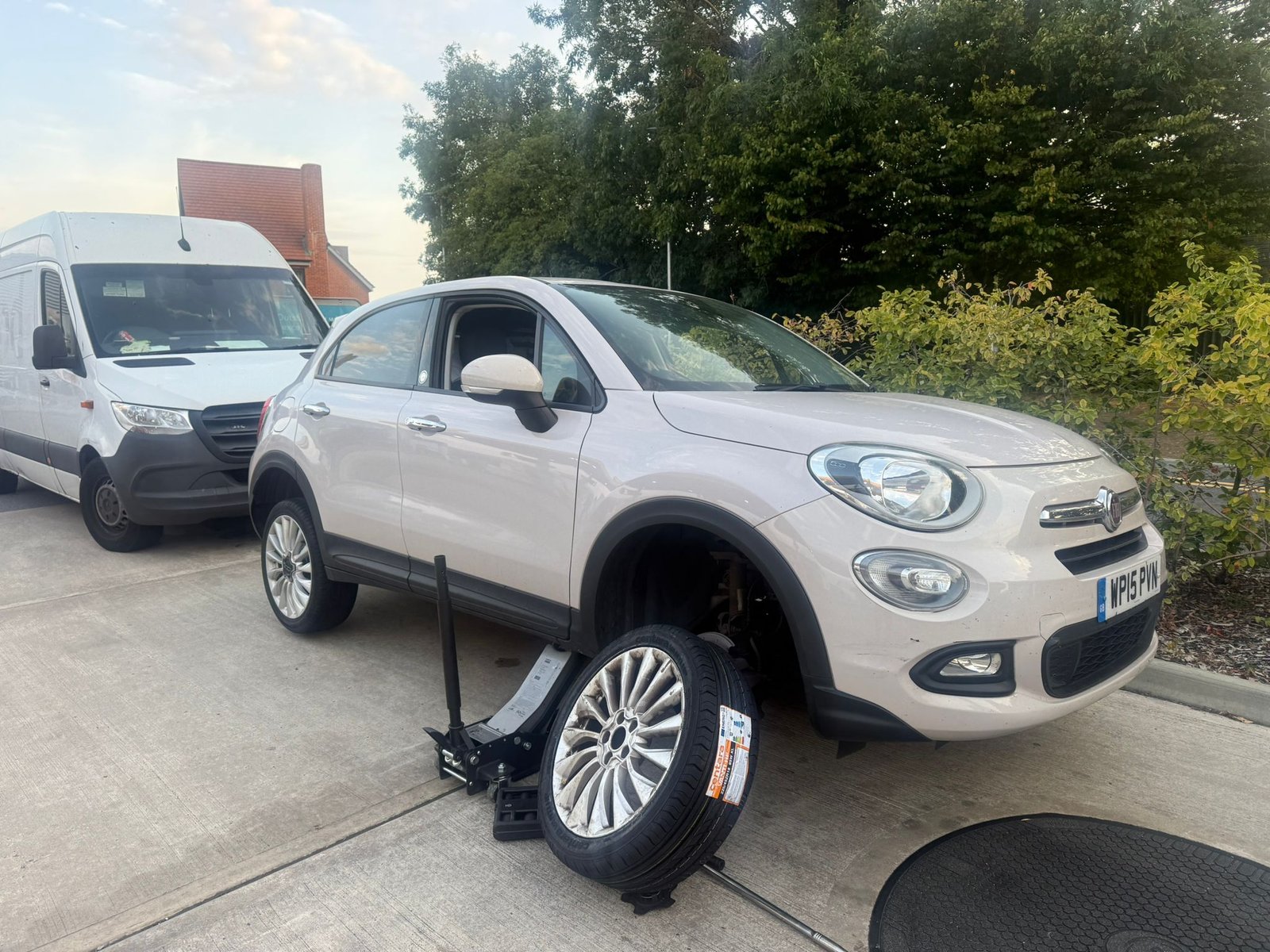
A blowout feels dramatic, but the safest response is simple. Hold the wheel firmly, ease off the accelerator and let the car slow down before you steer to the side. Once you’ve stopped, switch on your hazard lights and stand well away from traffic. Call us with your location and we bring a replacement tyre in the right size. If it happens on the M4, follow the steps on our motorway tyre assistance page.
Potholes cause a lot of the tyre damage we see around Reading, especially after a wet winter. A hard hit can pinch the tyre between the rim and the road, leaving a bulge, a cut on the inner edge or a dent in the wheel. If you’ve hit a pothole hard, look at the sidewalls the next morning. A bulge that wasn’t there before means the tyre needs replacing.
Sometimes a puncture turns out to be beyond repair. The nail may have gone into the shoulder, or the tyre may have been driven flat for a short way and damaged inside. Our fitters check for this during every puncture repair, and if the tyre fails the checks they can usually replace it in the same visit.
Whatever the reason, we check the wheel too. A cracked or bent rim can stop a new tyre from sealing, so we look it over before fitting and tell you straight away if there’s a problem. If you’d rather talk it through first, get in touch and send a photo of the damage.
Know before you call
Tread depth guide
Tread Depth
| 8 mm | Typical new car tyre |
|---|---|
| 4 mm | Halfway worn. Keep an eye on it at each service |
| 3 mm | Many safety groups advise replacing from here |
| 2 mm | Plan replacement now, grip in the wet is reduced |
| 1.6 mm | UK legal minimum across the central three quarters |
| Below 1.6 | Illegal. Up to £2,500 fine and 3 points per tyre |
Quick check: Put a 20p coin into the main groove. If you can see the coin’s outer band, the tread may be close to the limit and worth measuring properly. We measure every tyre for free when we visit.
One tyre or two?
One tyre
Fine if the other tyre on that axle is the same type and still has good tread.
Two tyres
Best when the other tyre is down to around 3mm. It keeps braking even across the axle.
Four tyres
Some four-wheel drive cars need all four close in tread depth. Check your handbook or ask us.
When fitting a new pair, most tyre makers recommend putting the new tyres on the rear axle. Tyres with more tread at the back help the car stay stable if you brake hard in the wet.
Why Mobile Tyre Doctor
Why choose us for tyre replacement in Reading
Same-day replacement
Popular sizes carried in the van, so most replacements are done in one visit.
Honest advice
If one tyre will do, we say so. We won't sell you a pair you don't need.
Nights, weekends and bank holidays, for damage that can't wait.
Nights, weekends and bank holidays, for damage that can't wait.
Old tyre recycled
We set the pressures, check your other tyres and take the old tyre away for recycling.
Simple Process
How it works, from call to done
Tell us what happened
Call or WhatsApp with your location and a photo of the tyre if you can. It helps us bring the right tyre.
Confirm size and price
We confirm the size, give you tyre options and the full price, and tell you when we will arrive.
Old tyre off, new tyre on
The fitter removes the damaged tyre, checks the wheel, then fits and balances the new one.
Final check of all tyres
We set the pressures, check your other tyres and take the old tyre away for recycling.
Pricing
Tyre replacement prices
From £80
- New tyre, fitting, balancing and valve
- Old tyre disposed of
- Second tyre 15% off (current offer)
- Set of four 35% off (current offer)
Testimonials
What Reading drivers say


 Trustindex verifies that the original source of the review is Google.
 Trustindex verifies that the original source of the review is Google.
 Trustindex verifies that the original source of the review is Google.
 Trustindex verifies that the original source of the review is Google.
 Trustindex verifies that the original source of the review is Google.
 Trustindex verifies that the original source of the review is Google.
 Trustindex verifies that the original source of the review is Google.
 Trustindex verifies that the original source of the review is Google.
 Trustindex verifies that the original source of the review is Google.
 Trustindex verifies that the original source of the review is Google.
Areas we cover
Mobile Tyre Replacement near you
We replace worn and damaged tyres at homes, workplaces and roadsides across Reading and nearby towns. We replace tyres across Reading, from Whitley and Southcote to Calcot and Theale, and in nearby towns including Twyford, Shinfield and Crowthorne. Call-out is free within 5 miles of Reading. Our Reading mobile tyre fitting home page lists every town and village we cover.
- Reading Town Centre
- Caversham
- Emmer Green
- Tilehurst
- Calcot
- Theale
- Southcote
- Whitley
- Earley
- Lower Earley
- Woodley
- Shinfield
- Sonning
- Twyford
- Winnersh
- Wokingham
- Arborfield
- Binfield
- Bracknell
- Crowthorne
- Sandhurst
- Pangbourne
- Purley on Thames
- Burghfield Common
- Mortimer Common
- Thatcham
- Henley-on-Thames
- Camberley
- Bagshot
- Frimley
- Farnborough
- Fleet
- Aldershot
- Farnham
- Woking
- Godalming
- Bordon
Frequently Asked Questions
Mobile Tyre Replacement: your questions answered
Can’t see your question? Our fitters are happy to help on the phone, any time.
Can you replace a tyre the same day?
Yes, for most common car and van sizes. We carry popular sizes in the van. If yours is less common we source it as fast as we can, often the same day or first thing next morning.
How do I know if my tyres need replacing?
Check the tread depth against the wear bars in the grooves, look for bulges, cuts or cracks on the sidewalls, and check the DOT date code for age. If the tread is at 1.6mm or there is sidewall damage, the tyre needs replacing.
Is it illegal to drive on a worn tyre?
Yes. In the UK a car tyre must have at least 1.6mm of tread across the central three quarters and around the whole tyre. Driving below that can mean a fine of up to £2,500 and three penalty points for each illegal tyre.
Do I need to replace both tyres on the same axle?
Not always. If the other tyre on that axle is the same type and still has good tread, one is fine. If it’s down to around 3mm, we suggest both so the car brakes evenly.
Should new tyres go on the front or the back?
Most tyre makers recommend putting the newer pair on the rear axle. Better grip at the back helps the car stay stable if you brake or turn hard in the wet.
My tyre has a bulge but it isn't flat. Is it safe to drive on?
No. A bulge means the cords inside are broken and the tyre can fail without warning, especially at speed. Keep journeys short and have it replaced as soon as possible.
How old is too old for a tyre?
There is no single legal age limit for car tyres. Many makers advise checking tyres every year once they pass five years and replacing them by ten years, even if the tread looks fine.
Can I have different tyre brands on my car?
It’s legal to have different brands on the front and rear axles. Tyres on the same axle should match in size and type, and ideally in brand and tread pattern, so the car handles evenly.
Can you replace a tyre if I've lost the locking wheel nut key?
Yes. We carry tools to remove locking wheel nuts without the key. Tell us when you call so the fitter comes prepared.
What happens to my old tyre?
We take it away and send it for licensed recycling. You don’t need to store it or take it to the tip.