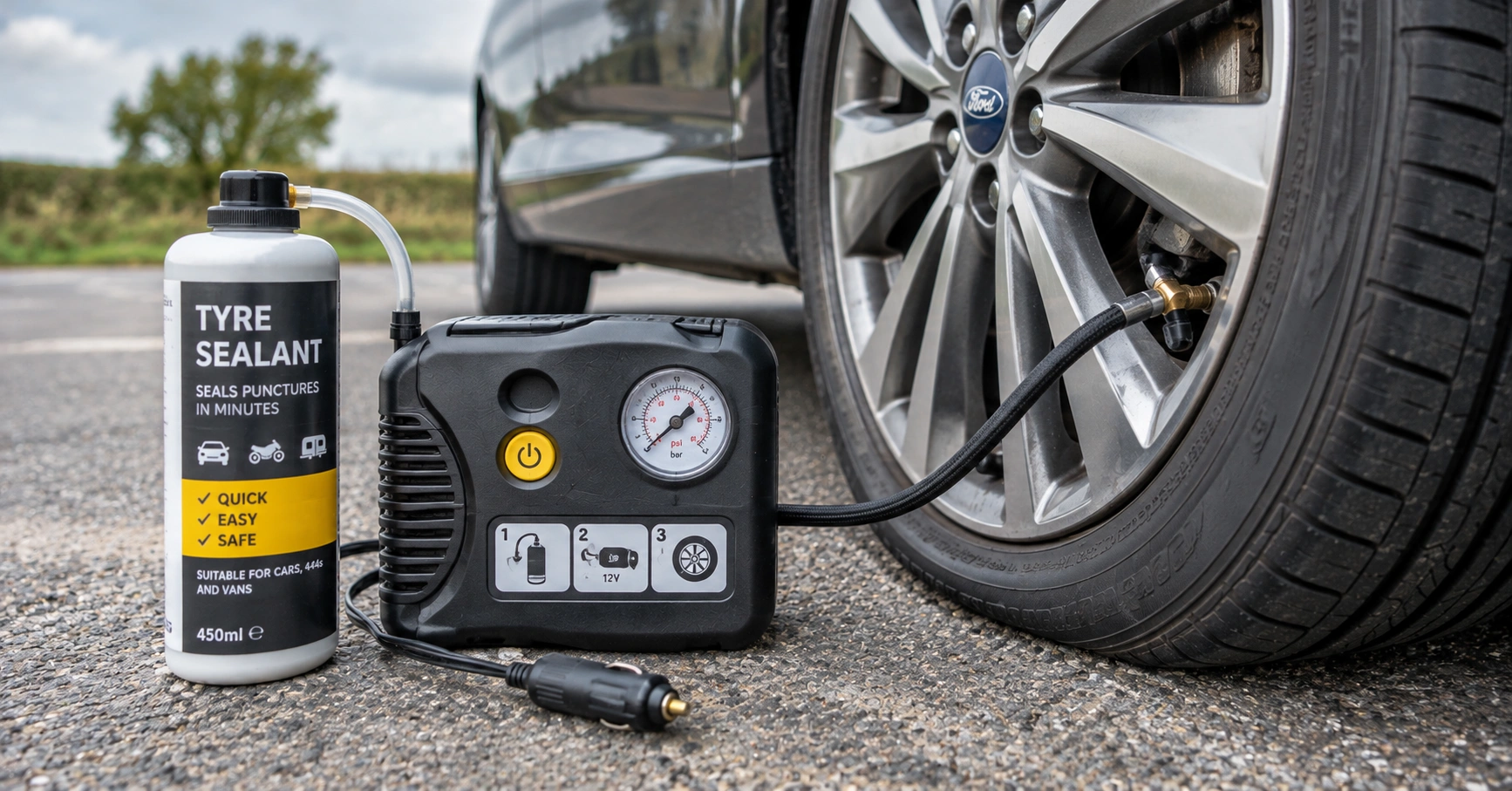
Many modern cars don’t have a spare wheel. Instead, they come with a bottle of tyre sealant and a small compressor.
A sealant kit can sometimes get you moving after a small puncture, but it is a temporary measure, not a permanent tyre repair.
It also can’t fix every type of damage.
Tyre sealant generally won’t fix:
- Sidewall damage
- Shoulder damage
- Tyre bulges
- Large cuts
- Large punctures
- A tyre that has come away from the rim
- A tyre badly damaged by being driven flat
Understanding these limits can stop you wasting sealant on a tyre that needs professional attention or replacement.
How Does a Tyre Sealant Kit Work?
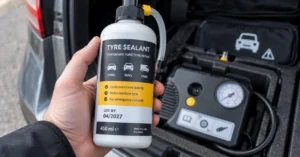
Most kits contain:
- A bottle or cartridge of liquid sealant
- A small electric air compressor
The sealant is pushed into the tyre through the valve. As the tyre rotates, the liquid spreads around the inside.
For a suitable small puncture, the sealant may temporarily plug the hole while the compressor restores enough pressure to get the vehicle moving.
The exact procedure varies between manufacturers, so always follow the instructions supplied with your vehicle or repair kit.
When Can Tyre Sealant Help?
Sealant may be useful when:
- The puncture is relatively small
- The damage is in the tread area
- The tyre hasn’t suffered major structural damage
- The tyre is still seated correctly on the wheel
- The kit hasn’t expired
- The manufacturer’s instructions say the damage is suitable
Even when the sealant works, the tyre still needs professional inspection afterwards.
What Can’t Tyre Sealant Fix?
| Type of Damage | Will Sealant Fix It? |
|---|---|
| Small tread puncture | Possibly as a temporary measure |
| Sidewall puncture | No |
| Shoulder damage | No |
| Sidewall cut | No |
| Tyre bulge | No |
| Large hole | No |
| Tyre off the rim | No |
| Major structural damage | No |
| Tyre damaged after being driven flat | No |
If the tyre has already been driven while flat, read can you drive on a flat tyre? to understand why internal damage can occur.
How to Use a Tyre Sealant Kit
Always follow the instructions supplied with your specific kit.
The general process is usually:
- Stop somewhere safe and switch on your hazard lights if necessary.
- Read the instructions before connecting anything.
- Check whether the tyre has obvious damage that sealant can’t fix.
- Connect the sealant bottle and compressor as instructed.
- Inflate the tyre to the specified pressure.
- Follow the kit manufacturer’s instructions about driving after inflation.
- Have the tyre professionally inspected as soon as possible.
If there is a nail or screw in the tyre, don’t automatically pull it out.
Read what to do if you find a nail or screw in your tyre before removing anything from the tyre.
What Should You Do After Using Sealant?
Don’t treat the sealant as a permanent puncture repair.
Once you’ve used it:
- Follow the kit’s speed and distance restrictions
- Arrange a professional tyre inspection
- Tell the fitter that sealant has been used
- Replace the sealant bottle or cartridge before relying on the kit again
A tyre fitter needs to know sealant has been used before inspecting or working on the tyre.
Whether the tyre can subsequently receive a permanent repair depends on the tyre’s condition, the location and size of the original damage, and the effect of the sealant used.
If you’re arranging assistance, see our before-you-call mobile tyre fitter checklist.
What About TPMS?
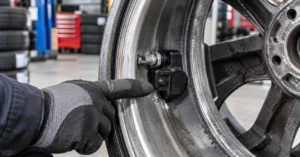
Many modern vehicles use a Tyre Pressure Monitoring System (TPMS).
After using sealant, tell the tyre fitter that the vehicle has TPMS and that sealant has been added to the tyre.
The tyre and related components can then be checked appropriately when the wheel is inspected.
Check the Expiry Date
Tyre sealant doesn’t last forever.
If your car relies on a sealant kit rather than a spare wheel, check the expiry date periodically.
Also make sure:
- The bottle hasn’t already been used
- The compressor is still in the vehicle
- The compressor cable and hose are present
- You know where the kit is stored
- You know how to use it before an emergency happens
Finding an expired bottle at the roadside isn’t the ideal time to learn what’s in your boot.
Tyre Sealant vs Calling a Mobile Tyre Fitter
Sealant can be useful when you need a temporary solution and the puncture falls within the kit’s limits.
A mobile tyre fitter is more appropriate when:
- The tyre is completely flat
- The damage is in the sidewall
- There’s a bulge or cut
- The sealant doesn’t work
- You don’t have a sealant kit
- The sealant has expired
- You want the tyre properly inspected
- A replacement tyre is required
If your car doesn’t have a spare, read no spare wheel? Your options after a puncture.
Frequently Asked Questions
Is Tyre Sealant a Permanent Repair?
No. Tyre sealant is intended as a temporary measure to help with certain punctures. The tyre should still be professionally inspected.
Can Tyre Sealant Fix a Sidewall Puncture?
No. Sealant isn’t a solution for sidewall damage.
Can I Use Sealant on a Tyre With a Nail in It?
It depends on the kit instructions and the location and size of the puncture. Don’t automatically remove the nail or screw before reading the instructions.
Can a Tyre Be Repaired After Using Sealant?
Sometimes, but it depends on the condition of the tyre, the original damage and the type of sealant used. Tell the tyre fitter exactly what product was added.
Does Tyre Sealant Expire?
Yes. Check the expiry date on the bottle or cartridge and replace it when required.
Need Help After a Puncture?
If your vehicle is safely parked in Reading and sealant isn’t suitable or hasn’t worked, call 07415955827 with your tyre size and location.
You can also view our mobile puncture repair and mobile tyre replacement services.