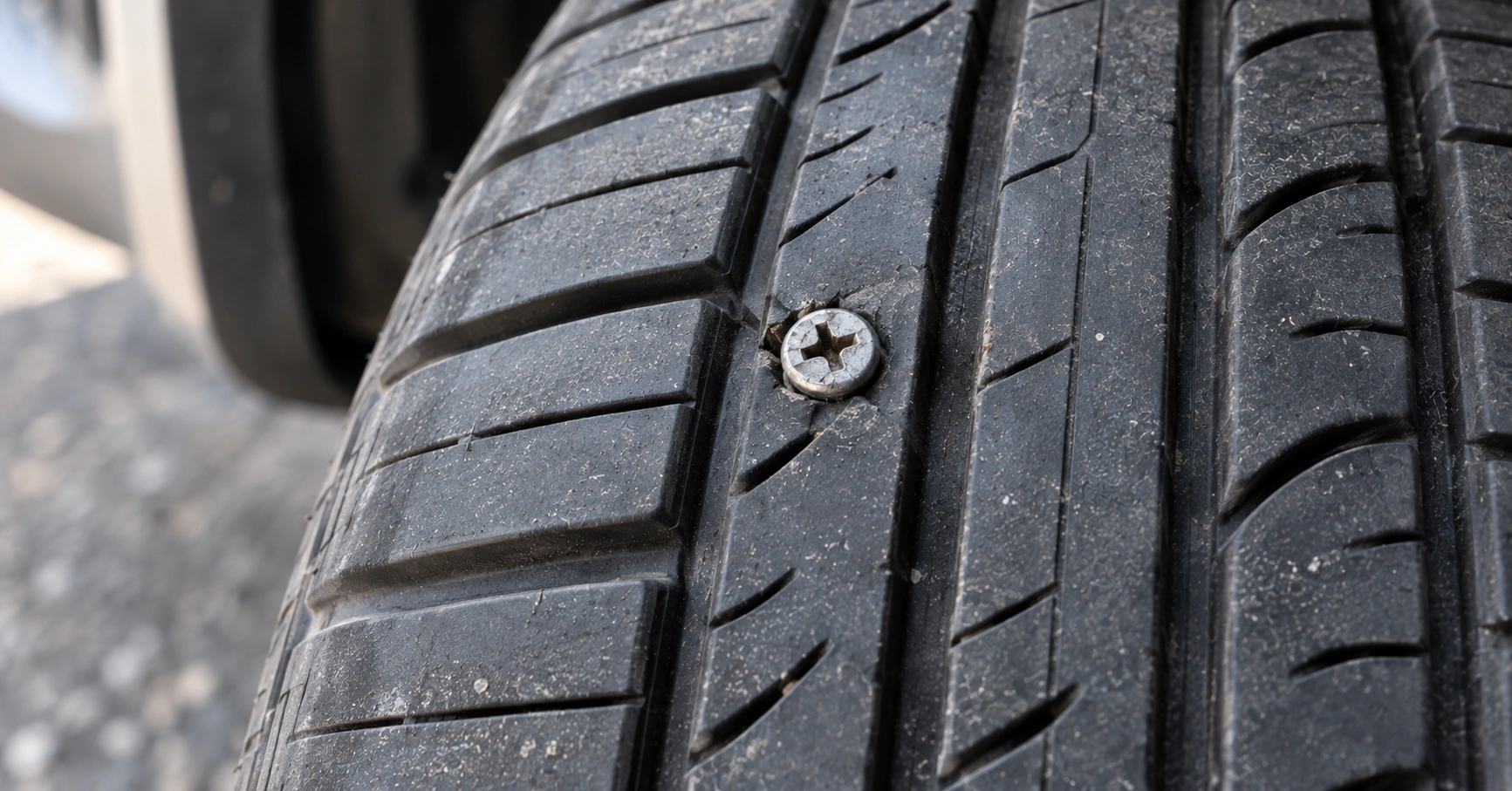
Found a nail or screw stuck in your tyre?
Don’t pull it out.
If the object is still in place, it may be slowing the air loss. Removing it can turn a slow puncture into a tyre that goes flat quickly.
What you should do next depends mainly on where the puncture is, whether the tyre is holding pressure and whether the tyre has been driven while flat.
What to Do First
1. Leave the Nail or Screw in Place
Don’t remove the object before the tyre has been inspected.
Even if it looks easy to pull out with pliers, leaving it in place can help slow the leak.
2. Check Where It Has Entered the Tyre
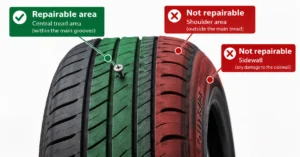
The location of the puncture is one of the main factors in deciding whether a repair may be possible.
| Damage Location | Repair Usually Possible? |
|---|---|
| Central tread area | Possibly, if the puncture and tyre meet repair requirements |
| Shoulder of the tyre | No |
| Sidewall | No |
| Multiple or larger damaged areas | Depends on the damage and condition of the tyre |
A small puncture in the permitted central tread area may be repairable.
Under BS AU 159, a puncture repair is generally limited to damage up to 6mm within the permitted repair area, and the tyre must otherwise be suitable for repair.
A puncture in the shoulder or sidewall isn’t repaired in the same way because these parts of the tyre flex significantly while driving.
If you’ve found damage or a lump on the side of the tyre, read our guide to tyre bulges and sidewall damage.
3. Check the Tyre Pressure
How quickly the tyre is losing pressure matters.
| Condition | What to Do |
|---|---|
| Pressure appears normal | Don’t remove the object. Arrange an inspection. |
| Pressure is dropping slowly | Avoid unnecessary driving and arrange assistance. |
| Tyre is visibly low | Don’t continue normal driving. |
| Tyre is completely flat | Don’t drive on it. |
If the tyre is already flat, see can you drive on a flat tyre? before moving the vehicle.
Can You Drive With a Nail in Your Tyre?
A nail in a tyre doesn’t automatically mean the tyre will instantly go flat.
Sometimes the object remains lodged in the tread and the tyre loses pressure slowly.
But that doesn’t make it safe to ignore.
If the tyre is still holding the correct pressure and the nail is in the central tread, a very short, gentle journey may sometimes be possible to reach a safe place or obtain professional assistance.
However, don’t use that as a reason to continue normal driving.
Avoid:
- Long journeys
- Motorway driving
- High speeds
- Heavy loads
- Continuing if pressure is falling
Don’t drive if:
- The tyre is visibly low or flat
- Air is escaping quickly
- The damage is in the sidewall
- There is a bulge or cut
- The vehicle feels unstable
- The tyre has already been driven flat
Driving on a deflated tyre can damage the internal sidewall and turn a potentially repairable puncture into a tyre that has to be replaced.
Should You Use Tyre Sealant?
Tyre sealant can sometimes provide temporary assistance for a small tread puncture, particularly if your car doesn’t have a spare wheel.
It isn’t suitable for every type of damage.
Sealant won’t fix:
- Sidewall damage
- A tyre bulge
- Large cuts
- Serious structural damage
- A tyre that has come away from the rim
If the nail is still in place, follow the instructions supplied with your particular sealant kit rather than automatically removing it.
Read tyre sealant and puncture repair kits: what they can and can’t fix before relying on sealant.
What Does a Proper Puncture Repair Involve?
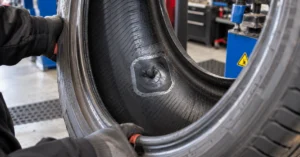
A proper puncture repair isn’t simply a plug pushed into the tyre from the outside.
The tyre should be removed from the wheel so the inside can be inspected.
This matters because driving with low pressure can cause internal damage that isn’t visible from outside.
The process normally involves:
- Removing the tyre from the wheel
- Inspecting the tyre internally and externally
- Confirming the puncture is inside the permitted repair area
- Checking the size and type of damage
- Carrying out an appropriate repair only if the tyre is safe to repair
A tyre shouldn’t be repaired if the damage falls outside the permitted repair area or the tyre has other damage that makes it unsafe.
When Will the Tyre Need Replacing?
A nail or screw doesn’t automatically mean a new tyre is required.
Replacement may be necessary if:
- The puncture is in the shoulder
- The puncture is in the sidewall
- The hole is too large
- The tyre has been damaged by driving flat
- The tread is below the legal limit
- The tyre has other structural damage
- Previous damage or repairs make another repair unsuitable
The final decision should be made after the tyre has been properly inspected.
What to Tell a Mobile Tyre Fitter
When you call, have the following information ready:
- Your exact location
- Full tyre size
- Whether the tyre is holding pressure
- Where the nail or screw appears to be
- Whether you’ve driven on the tyre while low or flat
- Whether you’ve used tyre sealant
- Whether you have your locking wheel nut key
A clear photo of the nail and tyre sidewall can also help.
See our complete before-you-call checklist.
Frequently Asked Questions
Should I Pull a Nail Out of My Tyre?
No. Leave it in place until the tyre can be inspected. Removing the nail or screw may cause the tyre to lose pressure much faster.
Can a Nail in a Tyre Be Repaired?
Possibly. A small puncture within the permitted central tread area may be repairable if the tyre is otherwise in good condition. Shoulder and sidewall damage can’t be repaired in the same way.
How Long Can I Drive With a Nail in My Tyre?
There isn’t a safe universal distance. A tyre may lose pressure slowly at first and then deteriorate. Arrange an inspection rather than continuing normal driving.
Can I Drive If the Tyre Still Has Air?
If the tyre is holding its correct pressure and there are no other signs of damage, a short journey to a safe location may sometimes be possible. Avoid unnecessary driving and continue checking the pressure.
Does a Nail Always Mean I Need a New Tyre?
No. Whether the tyre can be repaired depends on the location and size of the puncture and the overall condition of the tyre.
Need a Nail or Screw Puncture Checked?
If your car is safely parked in Reading, call 07415955827 with your tyre size and location.
Depending on the damage, you may need our mobile puncture repair or mobile tyre replacement service.