Introduction
Your vehicle’s tyres are the only part of your car that maintains direct contact with the road. No matter how advanced your braking system, suspension, or steering technology may be, worn-out tyres can significantly reduce your safety while driving.
Unfortunately, many drivers continue using tyres long after they have become unsafe. While tyres may look fine from the outside, hidden damage, worn tread, and sidewall deterioration can create serious risks that often go unnoticed.
Knowing when your car needs new tyres can help prevent expensive breakdowns, improve fuel efficiency, and most importantly keep you safe on the road.
In this guide, we explain the most common warning signs that indicate your tyres may need replacing immediately.
1. Tread Depth Is Too Low
Tyre tread is essential for maintaining grip, especially during wet weather.
In the UK, the legal minimum tread depth is 1.6mm, but many tyre professionals recommend replacing tyres once tread reaches 2–3mm for better safety.
Low tread can cause:
- Reduced traction
- Longer braking distance
- Poor wet weather handling
- Increased hydroplaning risk
A simple way to check tread depth is by using a tyre tread gauge.
If tread becomes dangerously low, tyre replacement should not be delayed.
2. Visible Cracks on the Tyre Sidewall
Tyres naturally degrade over time.
Exposure to sunlight, changing temperatures, road salt, and poor maintenance often causes sidewall cracking.
Small cracks may seem harmless initially, but over time they weaken the structural integrity of the tyre.
Common causes include:
- Ageing rubber
- UV damage
- Low tyre pressure
- Extreme weather exposure
Sidewall cracks often indicate the tyre is approaching the end of its safe lifespan.
3. Frequent Loss of Air Pressure
If you constantly need to inflate the same tyre every few days, there may be an underlying issue.
Possible causes include:
- Small punctures
- Valve damage
- Rim leaks
- Internal tyre damage
Driving with continuously low tyre pressure increases wear and can reduce fuel economy.
Repeated air pressure loss usually indicates that inspection or replacement is necessary.
4. Uneven Tyre Wear
Uneven wear patterns are often a sign of mechanical problems.
You may notice one side of the tyre wearing faster than the other.
This usually happens because of:
- Poor wheel alignment
- Suspension problems
- Incorrect tyre pressure
- Wheel balancing issues
Ignoring uneven tyre wear can reduce vehicle control and shorten overall tyre lifespan.
Regular inspections help identify these issues early.
5. Steering Wheel Vibrates While Driving
Steering wheel vibration can indicate tyre-related problems.
Common causes include:
- Internal tyre belt damage
- Wheel imbalance
- Uneven tread wear
- Bent wheel rims
If vibration becomes noticeable at higher speeds, tyres should be inspected immediately.
Driving long distances with damaged tyres may create larger suspension problems.
6. You Have Experienced Multiple Punctures Recently
Tyres that have already been repaired multiple times often become structurally weaker.
Repeated puncture repairs may temporarily fix the issue, but older tyres become more vulnerable to additional damage.
Signs include:
- Multiple repair patches
- Thin tread depth
- Nail damage in different areas
At this stage replacement is often safer than continuous repair.
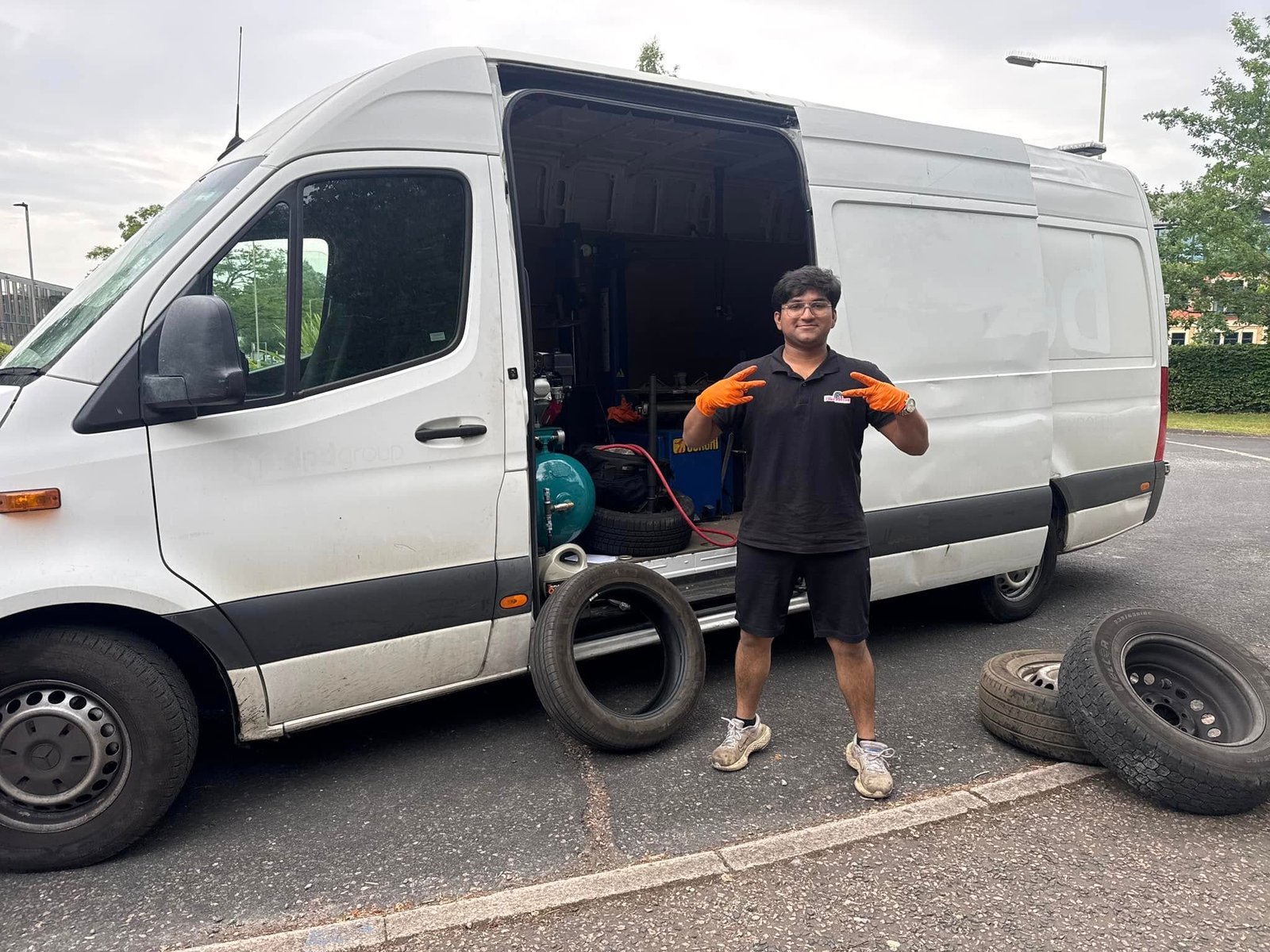
If roadside assistance is needed, many drivers choose mobile tyre fitting services rather than visiting a garage.
(Internal Link → Homepage Service Page)
7. Tyres Are More Than 5 Years Old
Even if tyres appear visually acceptable, rubber compounds degrade with age.
Most tyre manufacturers recommend inspection after 5 years and replacement between 6–10 years depending on usage.
Older tyres often develop:
- Hard rubber surfaces
- Reduced grip
- Sidewall deterioration
- Increased blowout risk
Age matters just as much as mileage.
8. Bulges or Blisters Are Visible
Bulges on the tyre surface usually indicate internal structural damage.
This often happens after:
- Hitting potholes
- Striking curbs
- Driving on underinflated tyres
Bulging tyres can fail suddenly without warning.
If bulges appear, replacement should happen immediately.
9. Poor Performance in Wet Conditions
If your car feels unstable during rain, tyres may be losing effectiveness.
Common symptoms include:
- Sliding during braking
- Reduced cornering grip
- Longer stopping distance
- Hydroplaning on wet roads
Tyre tread channels water away from the contact patch.
As tread wears down, wet weather performance decreases dramatically.
10. Increased Fuel Consumption
Many drivers do not realize tyres directly affect fuel economy.
Worn tyres or incorrect tyre pressure create higher rolling resistance.
This forces the engine to work harder and increases fuel usage.
Poor tyre condition may quietly increase long-term driving costs.
How to Extend Tyre Lifespan
To maximise tyre life:
- Check pressure weekly
- Rotate tyres regularly
- Avoid harsh braking
- Fix wheel alignment problems early
- Inspect tread depth monthly
Proper maintenance can significantly reduce replacement frequency.
Frequently Asked Questions
How long do car tyres usually last?
Most tyres last between 20,000 and 40,000 miles, depending on driving habits and maintenance.
What is the legal tyre tread depth in the UK?
The legal minimum tread depth is 1.6mm.
Can old tyres look fine but still be unsafe?
Yes. Internal tyre deterioration is often invisible from the outside.
Final Thoughts
Tyres directly affect braking, steering, and overall vehicle safety.
Ignoring early warning signs often leads to expensive roadside breakdowns and dangerous driving conditions.
Regular inspections help identify tyre problems before they become serious.
If replacement becomes necessary, professional tyre specialists can often provide convenient roadside solutions without requiring a garage visit.
Read our guide on What To Do After a Tyre Blowout While Driving.