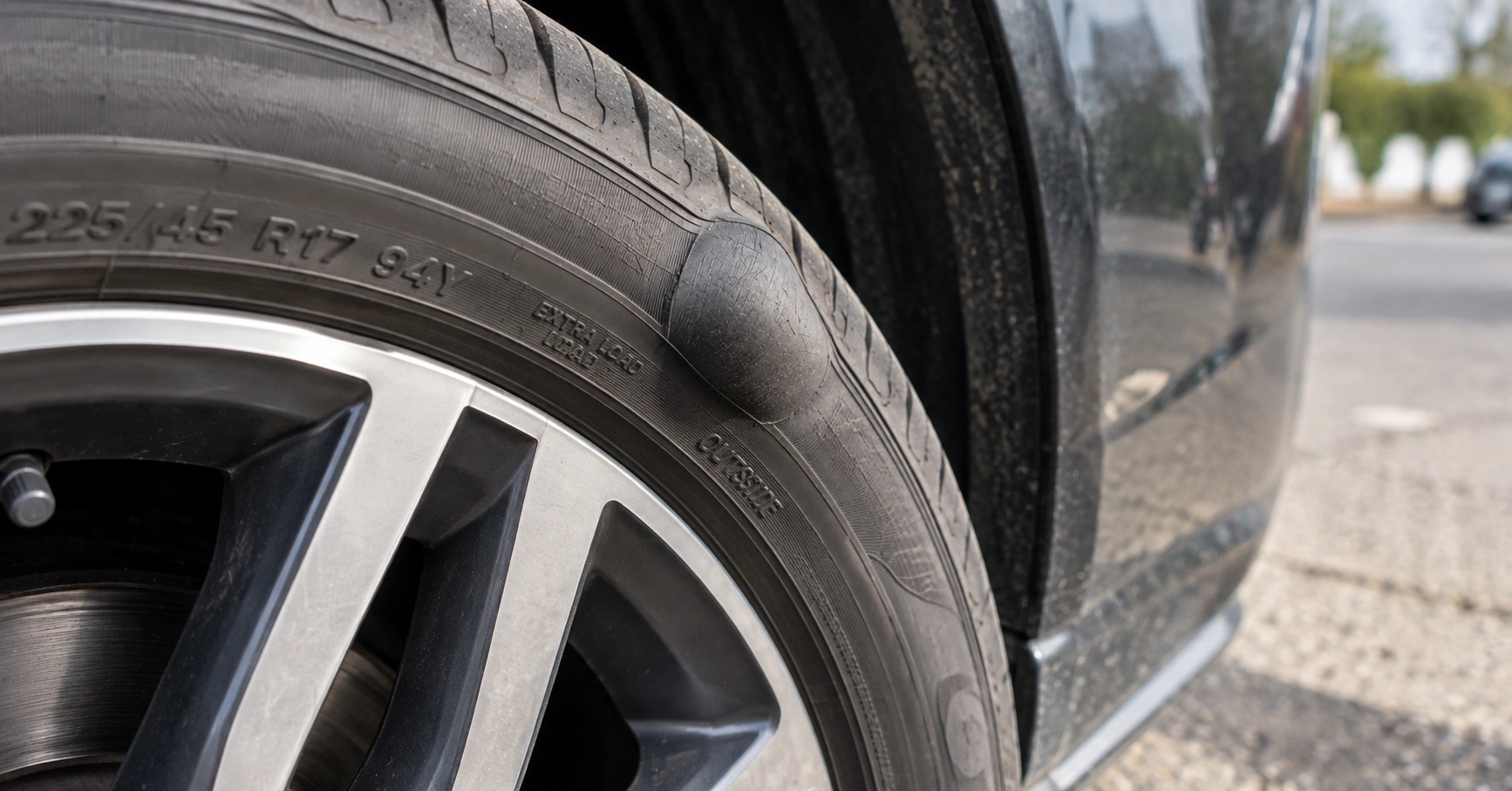
A bulge in the sidewall of a tyre is a serious warning sign.
If you can see a bubble, lump or bulge in the side of the tyre, don’t continue driving normally on it.
A bulge can mean the tyre’s internal structure has been damaged, allowing air pressure to push the outer rubber outwards.
Sidewall structural damage can’t be repaired in the same way as a small puncture in the central tread.
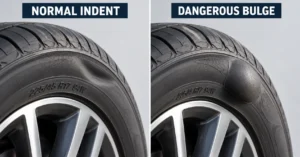
However, not every mark on a sidewall is automatically dangerous. Some tyres have moulding marks, lettering and protective features that can look unusual.
The important thing is knowing what signs require immediate attention.
Why Does a Tyre Sidewall Bulge?
A tyre contains internal structural components that give it strength.
If those components are damaged, the internal air pressure can push against a weakened section of the sidewall and create a visible bulge.
Common causes include:
- Hitting a pothole
- Striking a kerb
- Driving over road debris
- Impact damage
- Driving with incorrect tyre pressure
- Previous tyre damage
A bulge may appear immediately after an impact or become noticeable later.
Which Sidewall Signs Are Serious?
| What You See | What It Could Mean |
|---|---|
| Bubble or outward bulge | Possible internal structural damage |
| Deep cut | Sidewall may be compromised |
| Visible cords or internal material | Serious tyre damage |
| Cracking/perishing | Age or deterioration |
| Impact damage after a pothole or kerb strike | Requires inspection |
| Minor moulding marks or lettering | May be normal tyre construction |
If you’re unsure whether a mark is damage or simply part of the tyre’s construction, have it inspected rather than guessing.
How to Check Your Tyre Sidewalls
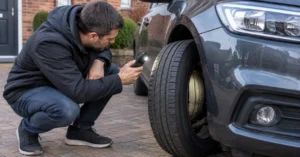
You don’t need specialist equipment for a basic visual check.
Look around each tyre for:
- Bulges or bubbles
- Cuts
- Cracks
- Exposed cords or internal material
- Objects embedded in the sidewall
- Signs of impact damage
Check both sides of the tyre where possible.
The inner sidewall is harder to see, which is one reason a professional inspection may be necessary after a significant pothole or kerb impact.
Why Can’t Sidewall Damage Be Repaired?
The sidewall flexes continuously as the tyre rotates.
This makes it fundamentally different from the central tread area, where certain small punctures can sometimes receive a permanent repair.
A repair to a structurally damaged sidewall wouldn’t restore the tyre to its required strength.
That’s why a small nail puncture in the central tread may sometimes be repairable while similar damage in the sidewall requires replacement.
For more on tread punctures, see nail or screw in your tyre: what to do.
Is It Legal to Drive With a Damaged Tyre?
Tyres used on UK roads must be suitable for use and free from certain serious defects.
Driving with a defective tyre can result in a fine of up to £2,500 and three penalty points per tyre.
Tyre condition is also checked during an MOT.
Damage that affects the tyre’s structure can result in an MOT failure.
The practical rule is simple: if you can see a bulge, exposed structure or serious sidewall damage, don’t ignore it.
What Should You Do If You Find a Tyre Bulge?
1. Don’t Continue Driving Normally
A bulge means the tyre may have structural damage.
Don’t rely on it for another journey.
2. Use a Spare Wheel If Appropriate
If you have a suitable spare wheel and can change it somewhere safe, follow your vehicle manufacturer’s instructions.
Don’t attempt a wheel change in a dangerous roadside location.
3. Don’t Use Sealant to Fix a Bulge
Tyre sealant is intended for certain punctures. It can’t restore damaged sidewall structure.
See what tyre sealant and puncture repair kits can and can’t fix.
4. Arrange Tyre Replacement
A tyre with structural sidewall damage normally needs replacing rather than repairing.
5. Check the Other Tyres and Wheel
If the damage followed a pothole or kerb impact, check the other tyres and wheels for signs of damage too.
What If You Have a Cut but No Bulge?
A cut should still be inspected.
How serious it is depends on:
- How deep the cut is
- Whether internal material is visible
- Where the damage is located
- Whether the tyre’s structure has been affected
Don’t assume a cut is harmless just because the tyre is still holding air.
What If the Bulge Appeared After Hitting a Pothole?
Stop somewhere safe and inspect the tyre.
A hard impact can damage more than the tyre.
Look for:
- Sidewall bulges
- Cuts
- Wheel damage
- Sudden pressure loss
- Steering vibration
- Vehicle pulling to one side
If steering, suspension or the wheel itself appears damaged, the vehicle may need workshop inspection or recovery rather than tyre replacement alone.
What Information Should You Give a Mobile Tyre Fitter?
If you need a replacement tyre, have these ready:
- Full tyre size
- Your exact location
- A photo of the damaged area
- Whether the tyre is holding pressure
- Whether you’ve driven on it after noticing the damage
- Whether you have your locking wheel nut key
Our before-you-call checklist explains what information to prepare.
Do You Need to Replace Both Tyres on the Axle?
Finding one damaged tyre doesn’t automatically mean every tyre needs replacing.
The condition and specification of the other tyre on the same axle should be considered.
Check:
- Tread depth
- Tyre size
- Load rating
- Speed rating
- Overall condition
- Type of tyre
Our guide on how to read a tyre sidewall explains the markings you need to match.
You can also read our guide to budget vs mid-range vs premium tyres when choosing a replacement.
Frequently Asked Questions
Can a Tyre Bulge Be Repaired?
No. A bulge can indicate structural damage inside the tyre. A structurally damaged sidewall needs replacement rather than a puncture repair.
Can I Drive Slowly With a Bulge in My Tyre?
You shouldn’t continue a normal journey on a tyre with a sidewall bulge. Arrange appropriate assistance rather than relying on reduced speed.
What Causes a Bubble in a Tyre Sidewall?
It commonly follows impact damage, such as hitting a pothole or kerb, which can weaken the tyre’s internal structure.
Will Tyre Sealant Fix a Sidewall Bulge?
No. Sealant can’t repair structural sidewall damage.
Does a Small Sidewall Cut Mean I Need a New Tyre?
It depends on the depth and nature of the cut. If the tyre structure is affected, replacement is required. Have the damage properly inspected rather than judging it only by size.
Found Sidewall Damage in Reading?
If your vehicle is safely parked and you need a replacement tyre, call 07415955827 with your tyre size and location ready.
See our mobile tyre replacement service for more information.