Introduction
A good set of tyres should comfortably last tens of thousands of miles, but plenty of drivers end up replacing theirs far sooner than necessary. Usually it isn’t bad luck – it’s a handful of small habits that quietly wear tyres down faster than they should, from underinflation to ignoring a slow drift in wheel alignment.
At Mobile Tyre Doctor, we see the full range: tyres that have covered 40,000 miles and still have plenty of tread left, and tyres barely a year old that are already down to the legal limit. The difference usually comes down to maintenance, not the tyre itself.
This guide covers the practical habits that genuinely extend tyre life, along with the warning signs that tell you it’s time for a repair, a replacement, or a professional check.
Why Tyre Lifespan Varies So Much Between Drivers
Two identical cars, bought with the same tyres on the same day, can end up needing replacements years apart. The main factors behind that gap are:
- Tyre pressure habits – consistently under or overinflated tyres wear faster
- Driving style – harsh braking, fast cornering, and rapid acceleration all accelerate wear
- Wheel alignment and balancing – misaligned or unbalanced wheels cause uneven wear
- Road conditions – potholes, kerbs, and rough surfaces all take a toll
- Load and usage – regularly carrying heavy loads adds extra strain
None of these are things you need specialist knowledge to manage. They’re mostly habits, and small changes make a real difference over the life of a tyre.
Keep Pressure Right, Every Time
Tyre pressure is the single biggest factor in how evenly and how quickly a tyre wears.
- Underinflated tyres flex more than they should, generating heat and wearing faster on the outer edges of the tread.
- Overinflated tyres wear faster down the centre of the tread and reduce your contact patch with the road.
- Correct pressure, checked when tyres are cold, gives even wear across the full width of the tyre.
Check pressure at least once a month, and always before a longer journey. The correct figures are usually printed on a sticker inside the driver’s door or listed in your vehicle handbook.
Rotate Your Tyres Regularly
Front and rear tyres wear differently, particularly on front-wheel-drive cars where the front tyres handle most of the steering and braking load. Rotating tyres periodically – swapping front to back – helps even out wear across all four, rather than wearing the front pair out significantly faster than the rear.
As a rough guide, rotating every 6,000–8,000 miles is a sensible habit, though your vehicle handbook may recommend a specific interval.
Watch Your Driving Style
Driving style has a bigger effect on tyre life than most drivers realise.
- Harsh braking wears down tread faster than gradual, anticipated stops
- Aggressive acceleration puts extra strain on rear tyres in particular
- Fast cornering increases wear on the outer shoulders of the tyre
- Speeding over rough surfaces or potholes risks both tread damage and misalignment
Smoother, more anticipatory driving isn’t just safer – it’s genuinely one of the cheapest ways to extend tyre life, since it costs nothing and simply changes how the car is driven day to day.
Get Wheel Alignment Checked
If your car pulls to one side, or you notice more wear on the inner or outer edge of a tyre than across the rest of the tread, alignment is often the cause rather than the tyre itself. Left unchecked, misalignment can wear an otherwise healthy tyre down well before its time.
It’s worth having alignment checked:
- After hitting a significant pothole or kerb
- Whenever you notice uneven wear starting to appear
- After fitting new tyres, to make sure they wear evenly from the start
Don’t Ignore Small Damage
A small stone chip, a shallow cut, or a slow puncture might seem too minor to worry about, but small damage tends to get worse under the pressure and heat of normal driving.
- A slow puncture left unrepaired can eventually lead to a full tyre failure
- A shallow sidewall cut can develop into a bulge if the tyre continues to flex under load
- Embedded debris, like a small stone or screw, can work its way deeper over time
Getting small issues checked early, through a service like our mobile puncture repair, is usually far cheaper than waiting until the tyre needs full replacement.
Park and Store Sensibly
Tyres age even when the car isn’t being driven much. A few habits help slow that process:
- Avoid parking in direct, prolonged sunlight where possible, since UV exposure accelerates rubber degradation
- Keep tyres away from oil, fuel, or chemical spills in a garage or driveway
- If a vehicle is stored for a long period, check pressures periodically rather than leaving it completely untouched
Know When It’s Time to Replace, Not Repair
Maintenance extends tyre life, but it doesn’t make a tyre last forever. It’s time to replace rather than repair when:
- Tread depth is approaching the legal minimum of 1.6mm
- There’s a bulge, blister, or significant sidewall damage
- The tyre is several years old, even if tread remains, since rubber perishes with age
- A puncture is in the sidewall rather than the tread, which generally can’t be safely repaired
If you’re unsure which applies to your tyre, our technicians can assess it and advise honestly, rather than replacing anything that can still be safely repaired.
Quick Reference: Habits That Help vs Habits That Harm
| Helps Tyre Life | Harms Tyre Life |
| Checking pressure monthly | Ignoring pressure for months at a time |
| Smooth, anticipatory driving | Harsh braking and hard acceleration |
| Rotating tyres regularly | Never rotating front to rear |
| Getting alignment checked after a pothole | Ignoring a car that pulls to one side |
| Repairing small damage promptly | Leaving a slow puncture unaddressed |
| Parking out of prolonged direct sun | Leaving a car parked in full sun for months |
Tyre Services Around Reading
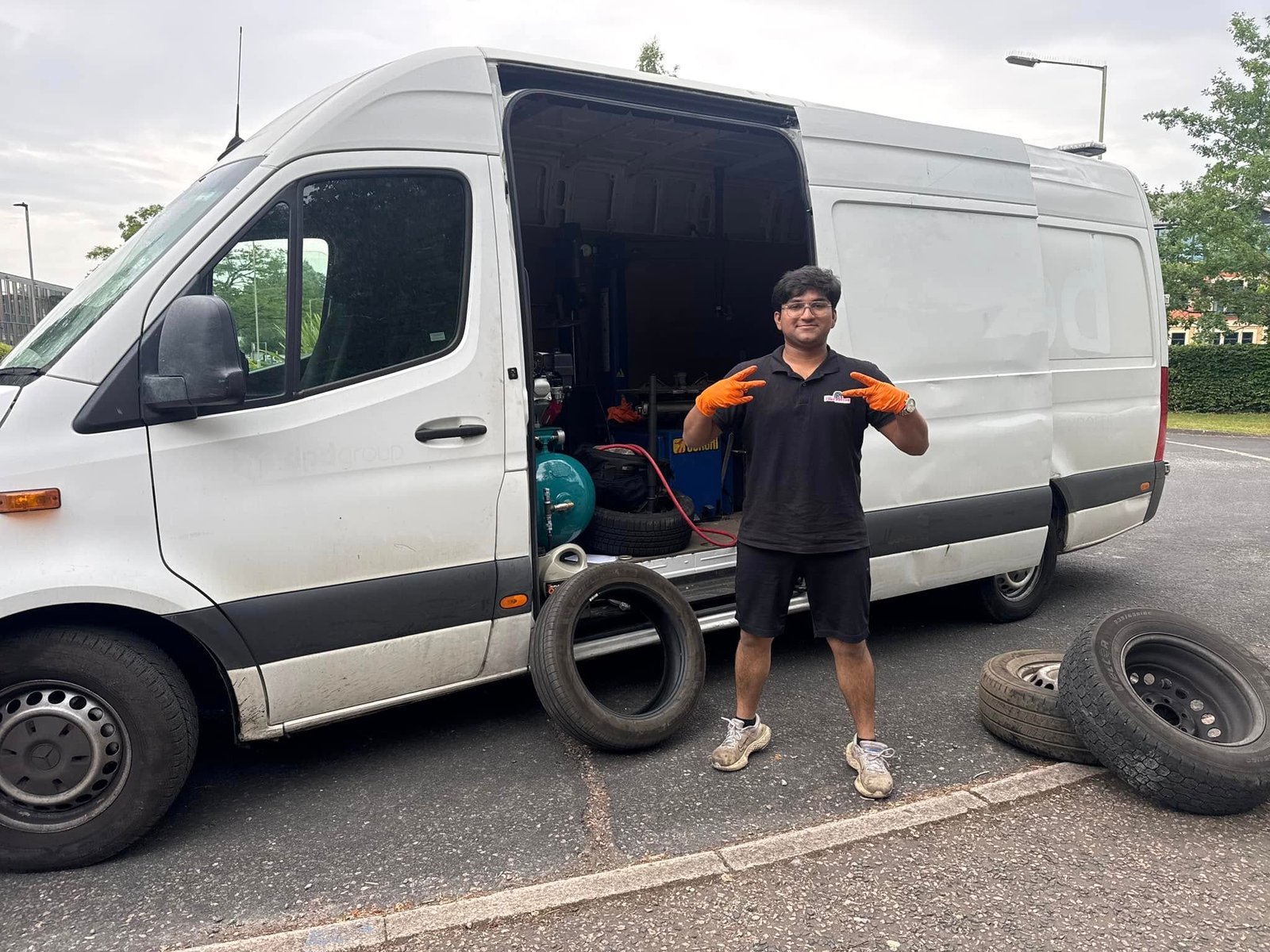
Mobile Tyre Doctor provides mobile tyre fitting, mobile tyre repair, mobile tyre replacement, and motorway tyre assistance across Reading and the surrounding area, including Caversham, Woodley, Tilehurst, Earley, Wokingham, Bracknell, Camberley, Fleet, and Farnham. Free call-out applies within a 5-mile radius of Reading, with a typical ETA of 20 to 30 minutes.
FAQs
- How many miles should a set of tyres last? It varies widely depending on driving style, tyre quality, and maintenance, but many tyres last somewhere between 20,000 and 40,000 miles with good care.
- How often should I check my tyre pressure? At least once a month, and always before a longer journey, checking when the tyres are cold for the most accurate reading.
- Does rotating tyres really make a difference? Yes. Front and rear tyres wear at different rates, and rotating them periodically helps spread that wear evenly, extending the useful life of the full set.
- Can a slow puncture be repaired, or does the tyre need replacing? Many slow punctures in the tread area can be safely repaired. Punctures in the sidewall generally cannot be repaired and will need a replacement.
- How do I know if my tyres are too old, even with tread remaining? Tyre age can be checked from the date code on the sidewall. Rubber can perish over time even with plenty of tread left, so age is worth checking alongside tread depth.
- Can you check and rotate my tyres at home? Yes. Our technicians can carry out inspections, rotations, and repairs at your home, workplace, or roadside location across Reading and the surrounding area.
Conclusion
Getting the most out of a set of tyres isn’t about luck – it comes down to a handful of consistent habits: checking pressure, driving smoothly, rotating regularly, and catching small problems before they become expensive ones. None of these take much time, but together they can add thousands of extra miles to a tyre’s life while keeping you safer on the road in the meantime.
If you’re not sure what condition your current tyres are in, a quick professional check is the easiest way to find out.
Call to Action
Want your tyres to last longer and stay safer? Contact Mobile Tyre Doctor today for a mobile tyre health check across Reading. Call or WhatsApp 07415 955827 – available 24/7, with free call-out within a 5-mile radius of Reading.